
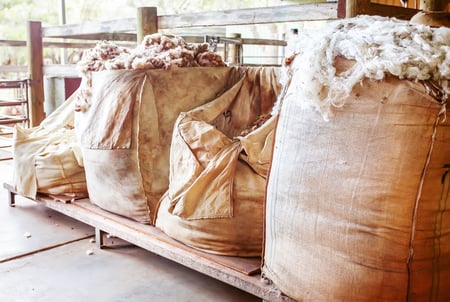
 Wool is a natural fibre derived from animals. Most of us grow up knowing that wool comes from sheep. We learn that they are shorn, and their fleeces are cleaned, spun and woven or knitted into fabric. But did you know wool comes from other animals too? Goats produce mohair and cashmere, rabbits fur produces angora and camel hair is also used to produce clothing and textiles.
There are several types of wool you’re likely to encounter in the textile market which include:
- Virgin wool: Wool that has never been processed or used before. It is typically high-quality fibre shorn from living sheep, often from a lamb’s first shearing.
- Merino wool: A type of virgin wool from Merino sheep, prized for its exceptionally fine fibres and softness.
- Recycled wool: Made from pre- or post-consumer textile waste, such as old garments or factory offcuts. In recycling the wool is sorted, processed into new yarn and tested for quality, before being woven and finished to form new fabric.
- Wool blends: Wool fibres are mixed with other fibres, such as polyester, cotton or viscose to add other qualities to the overall fabric, such as durability, breathability or less heaviness.
In this article, we'll look at the environmental benefits and costs of wool production and recycled wool, and how retailers and brands can find sustainable options when sourcing wool and wool blend fabrics.
table of contents:
So, What Is the Problem with Wool?
How can Wool be Made More Sustainable?
What is Responsibly Sourced Wool (RSW)?
How Can Retailers and Brands Transition to Sustainable Wool?
Why focus on wool?
Global wool production is around 2 million tonnes annually, with approximately 60% used in clothing. Overall, wool accounts for about 0.9% of the global textile trade. (Source).
Wool is a superior fabric with valuable qualities not found in any other fabrics. Wool fibres have a natural crimp (a wave-like structure) that creates tiny air pockets, providing excellent insulation, hence why we all love a woolly jumper in the winter! At the same time, wool is breathable, moisture-wicking and durable.
Wool is expensive to produce, but popular as a clothing material for several reasons. Firstly, it’s comfortable to wear and helps regulate body temperature, keeping you warm in winter and cool in summer. Thanks to its moisture management and natural resistance to bacterial growth, wool tends to be odour-resistant (particularly in the case of merino wool.) For this reason merino wool is particularly popular among outdoor enthusiasts (hikers, skiers, climbers) and travellers. Additionally, wool garments require less frequent washing, and when they are washed, odours are effectively released during the process.
If that isn't enough, wool is naturally flame-resistant, which makes it well suited to both clothing and home furnishings and upholstery.
Is wool sustainable?
Yes, but with important caveats.
Wool is 100% natural and renewable and therefore considered to be more environmentally friendly than synthetic fibres such as polyester. Sheep regrow their fleece annually, making wool a continually replenished resource when managed responsibly.
It is also biodegradable. Unlike synthetic fibres that can persist in soil and oceans for decades, wool breaks down naturally in terrestrial and marine environments, returning nutrients such as nitrogen to the soil.
Wool is durable and long-lasting, when taken care of, meaning garments can have a longer lifespan and do not need replacing as frequently.
Wool is also one of the most commonly recycled apparel fibres with a recycling industry going back 200 years.
Wool tends to need less washing, which reduces water and energy use during the garment’s lifetime. Wool washes also tend to be cooler and use less energy, as you cannot spin them hard in order to prevent shrinkage or damage. Wool does not shed microplastics, and its production generally requires fewer petrochemicals than synthetic fibres.
Importantly, wool is made from renewable atmospheric carbon. Sheep graze on plants that absorb carbon dioxide from the atmosphere during photosynthesis. That carbon is then converted into wool fibre as the sheep grow their fleece.
In fact, around half the weight of wool fibre is organic carbon. Through grazing, sheep transform plant material into fibre, effectively storing some of that carbon within the wool itself. At the end of its life, wool can even act as a soil fertiliser as it decomposes.
So, what is The problem with wool?
Wool seems like an amazing sustainable fabric — what’s not to like? Unfortunately, wool presents a number of sustainability challenges particularly when produced at scale.
One of the biggest concerns is land use and emissions. Sheep farming requires large areas of land, which can contribute to overgrazing, soil degradation and biodiversity loss if not properly managed. There is potential in some climates for pasture lands to become carbon sinks — where the land absorbs more carbon than it produces — but research is at an early stage.
Sheep are also ruminant animals, which means they produce methane during digestion through a process known as enteric fermentation. Methane is a powerful greenhouse gas with a global warming potential 28–34 times greater than carbon dioxide.
The animal fibre industry produces an estimated 35 million tonnes of CO₂ equivalent emissions each year, with sheep wool responsible for the vast majority (98%) of this total. In fact, up to 75% of wool’s environmental impact comes from the sheep themselves, primarily through methane and nitrous oxide emissions.
A single sheep can produce more than 30 litres of methane per day. Nitrous oxide emissions are generated from nitrogen in sheep manure and urine, while additional emissions come from feed production, farm vehicles and the energy used during shearing.
Water use is another sustainability challenge for wool. While sheep themselves don’t require irrigation in the same way as cotton crops, water is heavily used in processing particularly during scouring (cleaning raw wool), dyeing and finishing.
There are also animal welfare concerns. Practices such as mulesing, a controversial procedure in which strips of skin are removed from around a sheep’s breech (backside) to prevent flystrike, often without pain relief, as well as poor shearing techniques and inadequate living conditions have been widely criticised. Mulesing happens mainly in Australia in the production of merino wool. The practice is banned in the UK, New Zealand and South Africa.
Farm to shop floor transparency in global supply chains is often limited, making it difficult for brands and consumers to verify how wool is sourced and how sustainable it is.
Finally, wool processing often relies on chemicals and energy-intensive treatments, especially when producing machine-washable or blended wool fabrics. These steps can erode some of wool’s natural sustainability advantages.
How Can Wool Be Made More Sustainable?
The long-term sustainability of wool depends largely on how it is produced, processed and managed throughout its lifecycle. Improvements in farming practices, supply chain transparency and manufacturing processes are essential if the fibre is to reduce its environmental footprint.
Several key approaches are helping move the industry in a more sustainable direction.
Regenerative farming
Regenerative farming focuses on restoring and improving ecosystems rather than simply maintaining them. This includes practices that rebuild soil health, increase biodiversity, improve water retention and enhance carbon sequestration.Healthy soils play a crucial role in climate mitigation because they store carbon and support diverse plant life. By implementing regenerative land management techniques such as rotational grazing, native pasture restoration and reduced chemical inputs, farms can improve soil quality while also lowering the climate impact of animal fibres.
Lake Hawea Station in New Zealand, has become a global case study in regenerative wool production. The station has committed to climate-positive farming and is implementing several innovative practices. These include generating renewable energy through solar and hydro power, with long-term plans to eliminate fossil fuel-powered vehicles.
The farm is also trialling methane-reduction strategies, including seaweed-based feed supplements that may help reduce methane emissions from sheep digestion. Alongside this, the farm prioritises soil health by implementing regenerative grazing practices, carefully managing nutrient cycles and using organic-based fertilisers to improve soil quality and long-term productivity.

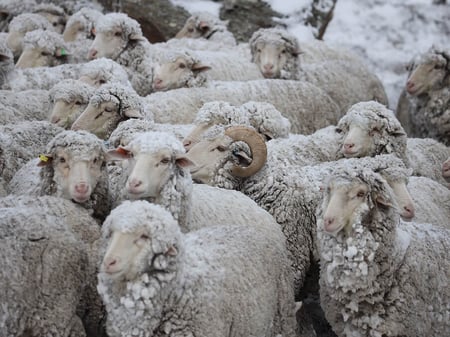
Higher animal welfare standards
Improving animal welfare is another critical component of sustainable wool production. Healthy sheep are not only ethically important but also produce higher quality wool. Industry groups such as the The Woolmark Company emphasise that high-quality wool is only produced by healthy sheep grazing on well-managed land. Strong animal welfare standards help ensure animals have access to adequate food and water, safe living conditions and humane treatment during shearing and handling.
To address consumer concerns, many brands are increasingly adopting certified wool standards such as the Regenerative Wool Standard (more on that later) that prohibit practices such as mulesing and require regular welfare audits.
Lower-impact processing
While much of wool’s environmental impact occurs on the farm, processing and manufacturing also play a role. Traditional wool processing can involve large volumes of water, chemical treatments and energy-intensive machinery.Reducing these impacts requires improvements such as:
- reducing chemical inputs during scouring and finishing
- improving water recycling and wastewater treatment
- transitioning textile mills to renewable energy sources
Local sourcing and shorter supply chains
Another strategy is local sourcing. Purchasing wool that is produced and processed closer to where garments are manufactured can reduce transportation emissions and simplify supply chains.Shorter supply chains also make it easier for brands to verify how wool is produced, helping support ethical and traceable sourcing while strengthening regional farming economies.
Circular economy models
Moving towards a circular textile economy is another key part of improving wool’s sustainability. Circular models aim to keep materials in use for as long as possible through repair, reuse and recycling.
Because wool is durable and biodegradable, it is well suited to circular design principles. Wool garments can often be repaired, resold or repurposed rather than discarded.
Wool waste can also be reused in other applications. For example, lower-grade wool fibres and textile waste are increasingly being used in products such as:
- building insulation
- acoustic panels
- carpet underlay
- gardening mulch and fertilisers
- These applications help prevent wool waste from ending up in landfill while creating additional value from the fibre.
Traceability and transparency
Greater supply chain transparency is essential for building trust and improving sustainability performance. Wool often passes through multiple intermediaries — from farms and brokers to processors and manufacturers — making it difficult to trace the origin of fibres.Digital traceability tools such as Segura supply chain mapping software and independent certification programmes help brands verify sourcing and communicate sustainability credentials clearly to consumers.
Organic wool
Organic wool comes from farms that avoid synthetic pesticides, fertilisers and genetically modified feed. Organic standards also typically include requirements around land management and animal welfare.
Although organic wool currently represents a small proportion of global production, it can reduce the environmental impact associated with chemical inputs and promote healthier ecosystems on farms.
What about Recycled wool?
By reclaiming fibres from old garments and textile waste, recycled wool reduces the demand for new raw material and keeps valuable fibres in circulation for longer. This is in fact an industry that goes back to 1813 in Batley, West Yorkshire, when Benjamin Law created a machine that could extract fibres again from waste wool and thereby created recycling from knitwear and woven textiles. This industry thrived in the north of England and over in Italy and now continues with iinouiio and Manteco in Tuscany, Italy, among others!
John Parkinson, from iinouiio gave an inspiring presentation at RSSC event in 2025 and explains more about the recycled wool industry in the video below.
There are major wins with wool recycling. Technology and recycling techniques have advanced to improve the quality of the resulting fibres. Carefully selecting coloured wool fibres can also remove the need for bleaching and dyeing altogether.
Still some other challenges must be overcome.
- The sorting process requires well-trained experts to speedily work through fabrics if the source is unknown.
- Recycled wool fibres can become shorter and weaker during processing, which may affect fabric durability, and so the recycling techniques and yarn produced must be thoroughly tested to ensure quality.
- Sourcing wool for recycling and customers to invest in it is a commercial challenge, both to build awareness of the fabric and options for production, as well as to affordability in the process. Therefore, scaling up high-quality recycling technologies is an important focus for future innovation.
Overall, with wool recycling, the outcome can be extremely high quality wool with Global Recycled Standard certification.
What Is Responsibly Sourced Wool (RSW)?
The Responsible Wool Standard (RWS) is a voluntary certification created by Textile Exchange, a global non-profit organisation that promotes more sustainable practices across the textile industry.
To be certified, every stage of the supply chain — from the sheep farm to the final seller — must meet the standard and be independently verified. Products labelled RWS-certified must contain 100% certified wool and come from farms where mulesing is not practised.
RWS certification confirms that wool comes from responsibly managed farms that follow the Five Freedoms of animal welfare, including freedom from hunger and thirst, pain and disease, fear and distress, environmental discomfort, and the ability for animals to express natural behaviours.
The standard also ensures traceability throughout the supply chain, allowing wool to be tracked from farm to finished product.
Overall, RWS aims to improve animal welfare, encourage responsible land management, reward best farming practices, and increase transparency across the wool industry.
Can Wool Ever Be Net Zero?
Achieving net-zero wool production is a complex challenge, but it may be possible under the right conditions.
The brand Allbirds, has already developed the world’s first net-zero carbon shoe. The design uses regenerative wool and a minimalist production process to reduce emissions as much as possible.
While this represents just one product in a global fashion industry dominated by fast fashion, it highlights the potential for innovation when sustainability is prioritised from the start.
Life cycle assessments on MWool, a recycled wool from Manteco, have achieved a certified Environmental Product Declaration, which transparently reports environmental data over the life cycle of products in accordance with the international standard ISO 14025.
In reality, wool is unlikely to be inherently net zero across all production systems. However, with robust measurement, better farming practices and low-impact manufacturing, low-emission or near-net-zero wool production is achievable.
Innovation in Wool Processing
Technological innovation is also helping address some of wool’s traditional environmental challenges.Several emerging developments are improving the efficiency and sustainability of wool processing.
Closed-loop water systems are being introduced in some textile mills to dramatically reduce water consumption during wool scouring and dyeing. These systems recycle and reuse water multiple times, reducing both freshwater use and wastewater discharge.
Another promising innovation is dry wool scouring, an alternative to traditional water-intensive cleaning methods. Instead of hot water and detergents, dry scouring uses organic solvents to remove impurities from raw wool. This approach can significantly reduce water consumption, energy use and wastewater pollution while also allowing for improved recovery of valuable by-products such as lanolin.
Other innovations include:
- enzyme-based treatments that replace harsh chemical finishing processes
- low-impact dyes that reduce toxicity and water pollution
- digital traceability tools that track fibres from farm to finished product
- fibre regeneration technologies that improve the quality of recycled wool
As these technologies continue to evolve, they could significantly reduce the environmental footprint of wool textiles, particularly when combined with responsible sourcing practices.
How Can Retailers and Brands Transition to Sustainable Wool?
For retailers and fashion brands, transitioning to more sustainable wool requires both better sourcing decisions and internal sustainability strategies.
Key actions include:
- mapping wool supply chains to understand fibre origins and identify risks
- establishing clear sourcing policies and sustainability targets
- partnering with certified farms, processors and mills
- investing in traceability systems and supply chain transparency
- educating consumers about fibre sustainability and garment care
- designing products for durability, repair and recyclability
Importantly, sustainability must be approached holistically. Fibre choice is only one part of a product’s environmental impact. Processing methods, logistics, manufacturing efficiency and end-of-life solutions all play a role.
By addressing sustainability across the entire value chain, brands can help ensure wool remains a viable and responsible fibre for the future.
How Segura Can Help
For brands navigating the complexities of sustainable wool sourcing, supply chain mapping is critical.
Segura enables retailers and manufacturers to gain deeper insight into their multi-tier supply chains, helping them track wool from farm to finished product. By improving transparency and data accuracy, brands can make more informed sourcing decisions and demonstrate compliance with sustainability standards.
With robust traceability tools, companies can:
- Verify responsible wool sourcing
- Monitor supplier compliance with systems including automated certification verification
- Reduce risks linked to unethical practices
- Support sustainability reporting and ESG goals
- Build stronger, more transparent supplier relationships
As expectations around ethical sourcing continue to grow, having the right systems in place is key. Solutions like Segura help brands move beyond intent and take measurable steps toward more responsible, sustainable wool supply chains.
Sustainable Sourcing by Fabric

About Segura
Segura is the leading fashion supply chain traceability solution, empowering fashion retailers and brands to deliver ethical, sustainable and efficient multi-tier supply chains.
Segura provides n-tier mapping, transparency, traceability, visualisation, compliance and reporting. Segura sits in the centre of your supply chain management structure creating a central repository for all your supply chain, ESG-related data and evidence, including from third-party data sources.
With all supply chain traceability data stored on a single platform, our customers get the right evidence in the right place to back up claims and meet regulatory compliance.
To keep up to date with our latest news; subscribe to our newsletter
To learn more about how Segura can help you manage your supply chain; contact us today

